Objective Movement Intelligence for Outpatient Orthopedic PT
We are developing wearable sensing and software that turn selected shoulder movement measurements into editable, clinician-reviewed Objective note text.
Our goal is to make measurement and documentation easier to use in everyday care—and to work with clinics to test whether the workflow is worth adopting.
Early-stage prototype. Initial clinic evaluations are staff-only and do not involve patient information.
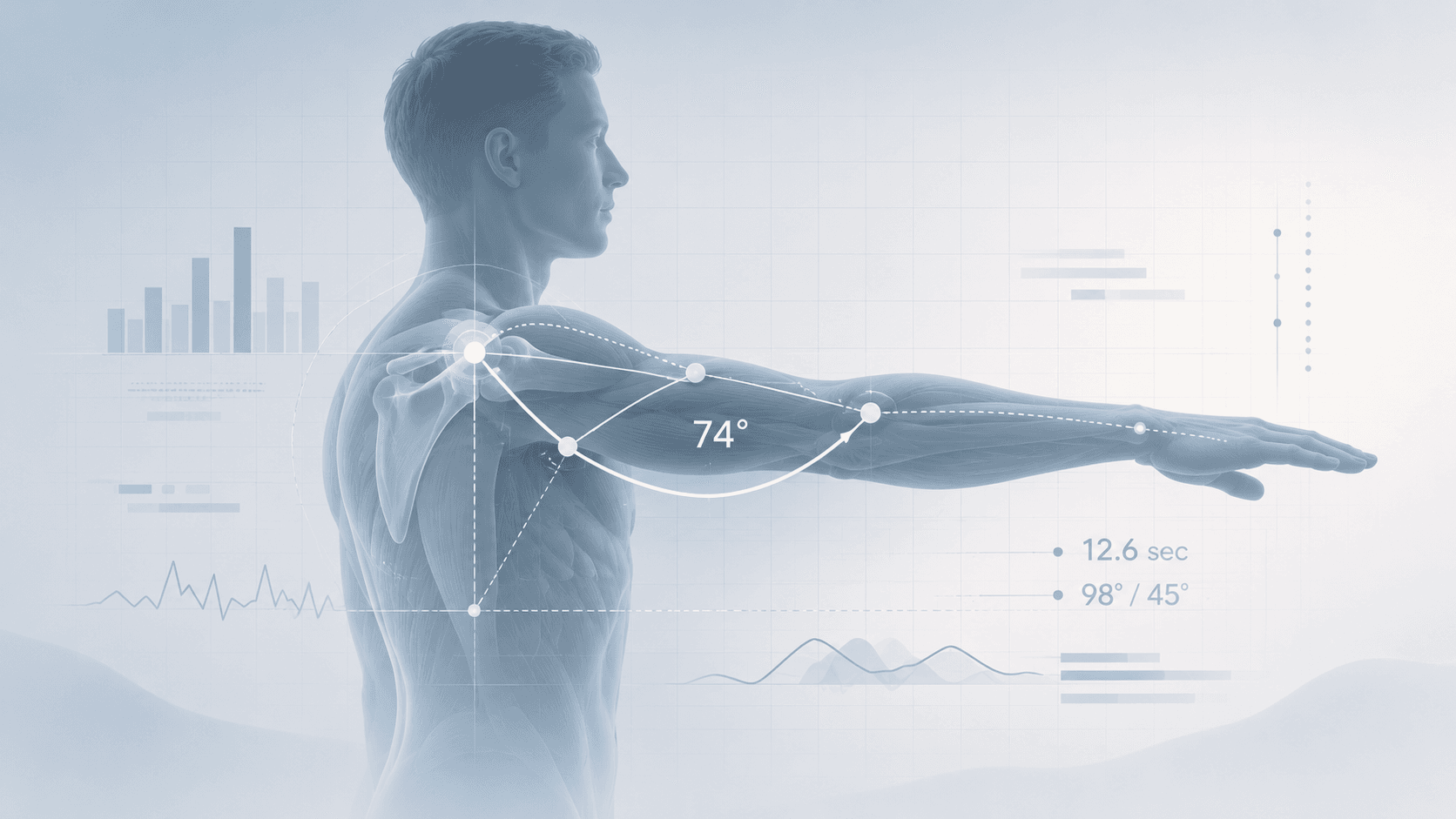
Better Movement Data Should Not Mean More Work
In our conversations with clinicians, useful measurements are only part of the challenge. Setup, repeated data entry, disconnected notes, and transferring information into the EMR can add work to an already-busy visit.
We are testing a practical question: can movement capture and documentation support fit the encounter well enough to make the overall task easier?
From Movement Measurement to Connected Visit Documentation
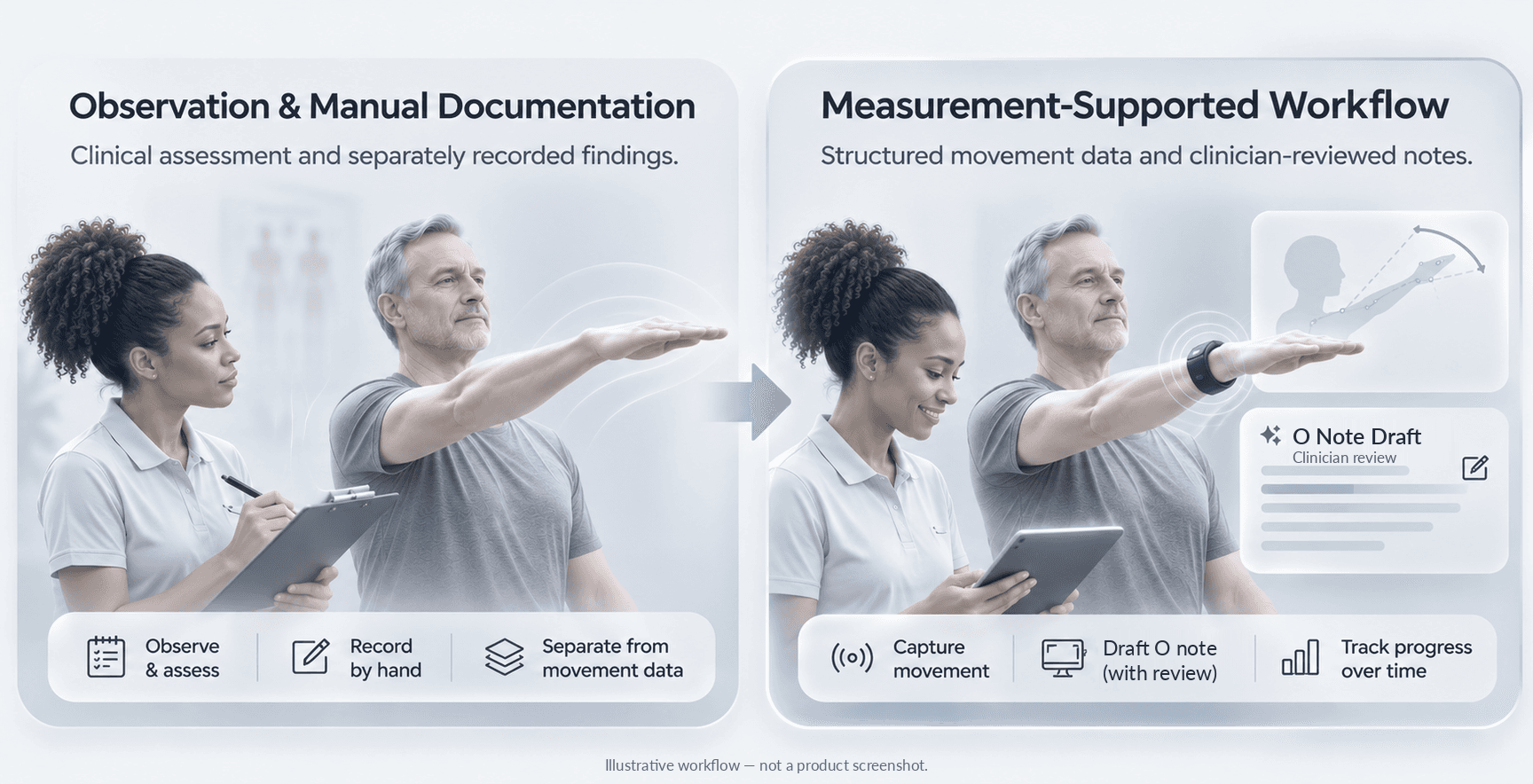
Our current prototype combines a wrist-worn sensor, an iOS app, and a clinician dashboard for selected shoulder workflows.
Objective Capture
Capture selected shoulder range-of-motion measurements and repetition counts, with reported pain and exertion recorded separately.
Documentation Support
Review and edit an Objective note draft, then copy approved text into the clinic’s existing documentation system.
Progress Insight
Compare selected movement measurements across visits to support clinician review.
In Development: Recording-Assisted Subjective Notes
An iOS build with recording and LLM-assisted Subjective-note drafting is awaiting internal testing, followed by PT testing. Web implementation is planned once that workflow is stable.
Next, we aim to bring reported information and measured movement into a unified session record, followed by richer session-to-session reporting for PTs and week-to-week summaries for patients.
Starting with Independent Outpatient Orthopedic PT Clinics
Our initial focus is busy, predominantly insurance-based outpatient orthopedic PT clinics with recurring shoulder measurement and documentation needs. Small multi-site practices and busy single-site clinics are welcome to explore fit.
We start with a focused, staff-only evaluation using staff demonstrations or synthetic examples—not patient information. Any later patient-involving pilot would require separate approval and appropriate safeguards.
Built Around Your Clinic, Your Team, and Your Patients
Technology should earn its place in care. We want to work with clinics to understand what would make this workflow worthwhile—and evaluate that value together.
For Clinic Owners — Value That Makes Business Sense
A new tool needs to justify its cost. We want to test whether connected measurement and documentation can support more effective use of clinician time and sustainable revenue growth—without adding pressure to already-busy teams.
For Physical Therapists — Less Friction, Not Another Task
Our goal is to reduce the total effort involved, from setup and measurement through reviewing, editing, and using the note. Clinician feedback will guide what we improve.
For Patients — Progress They Can See and Understand
Our goal is to help clinicians explain measured changes more clearly. Longer term, we aim to develop patient-friendly weekly progress summaries and explore timely between-visit support within agreed care-team capacity.
These are goals we are working toward—not demonstrated revenue, time-saving, or patient-outcome results.
Leadership & Multidisciplinary Collaboration
Ping Liu — Founder
Ping brings more than 30 years of experience developing and commercializing fitness and consumer products internationally, with products distributed across more than 30 countries.
Ativafit AI combines global product commercialization, biomedical sensing, applied AI engineering, and clinical collaboration. Practicing physical therapists help shape the workflow as the team tests what is reliable and useful in daily care.

Help Shape a Workflow Worth Using
Tell us where measurement and documentation create friction—and what would make an evaluation worthwhile for your clinic.
We will work with your team to agree on a focused use case, practical success measures, and a manageable feedback process. Your experience will help shape what we improve and whether there is a useful next step.
Initial evaluations are staff-only and do not involve patient information.